Hidden Stress and Belly Fat: 5 Surprising Things That May Be Raising Cortisol
Hidden Stress and Belly Fat: 5 Surprising Reasons You’re Struggling to Lose Weight
You practice boundaries. You do yoga and meditate. You surround yourself with good people. You don’t feel particularly stressed.
Yet you’re still struggling with stubborn belly fat, cravings, poor sleep, or low energy.
Here’s something most people don’t realize:
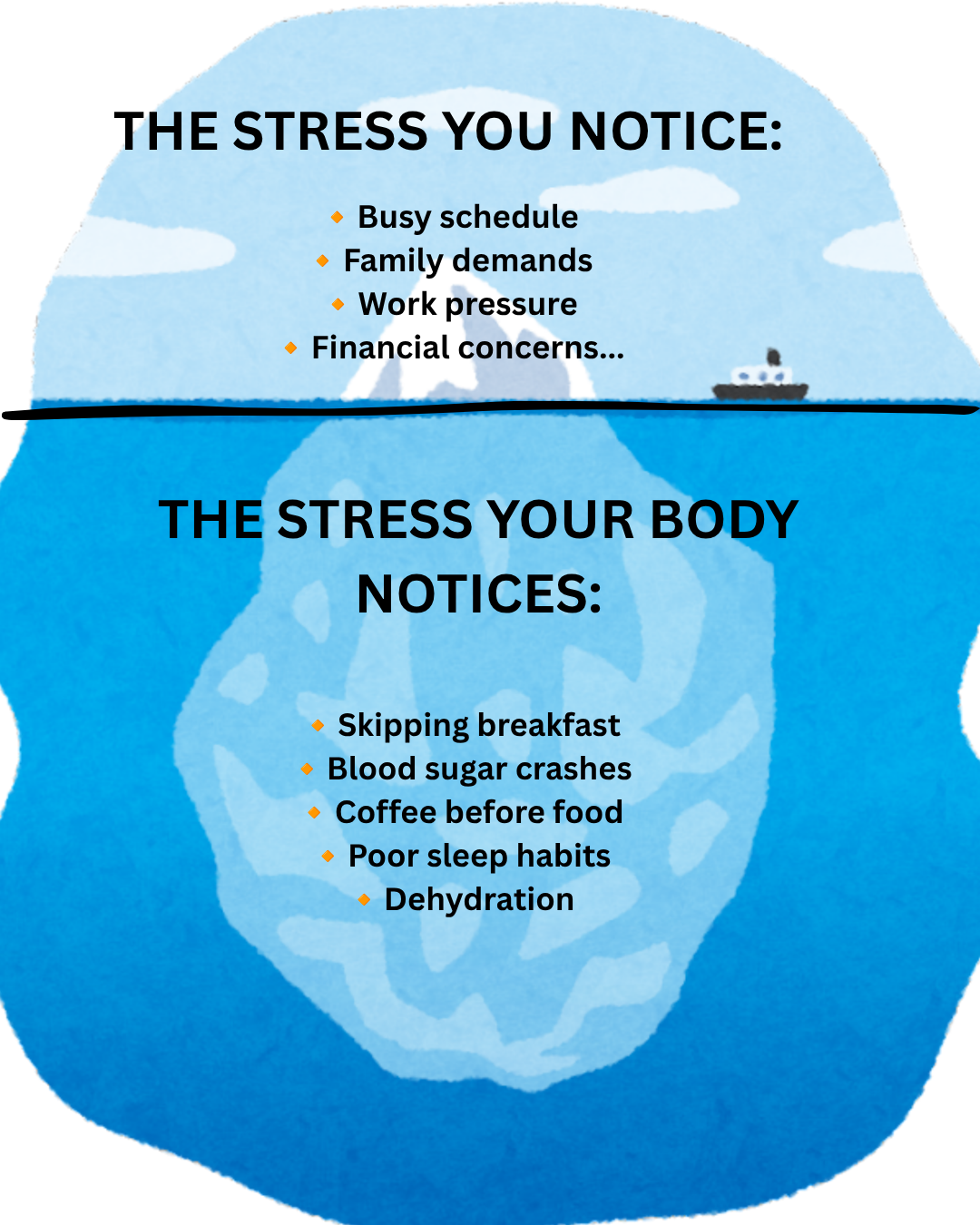
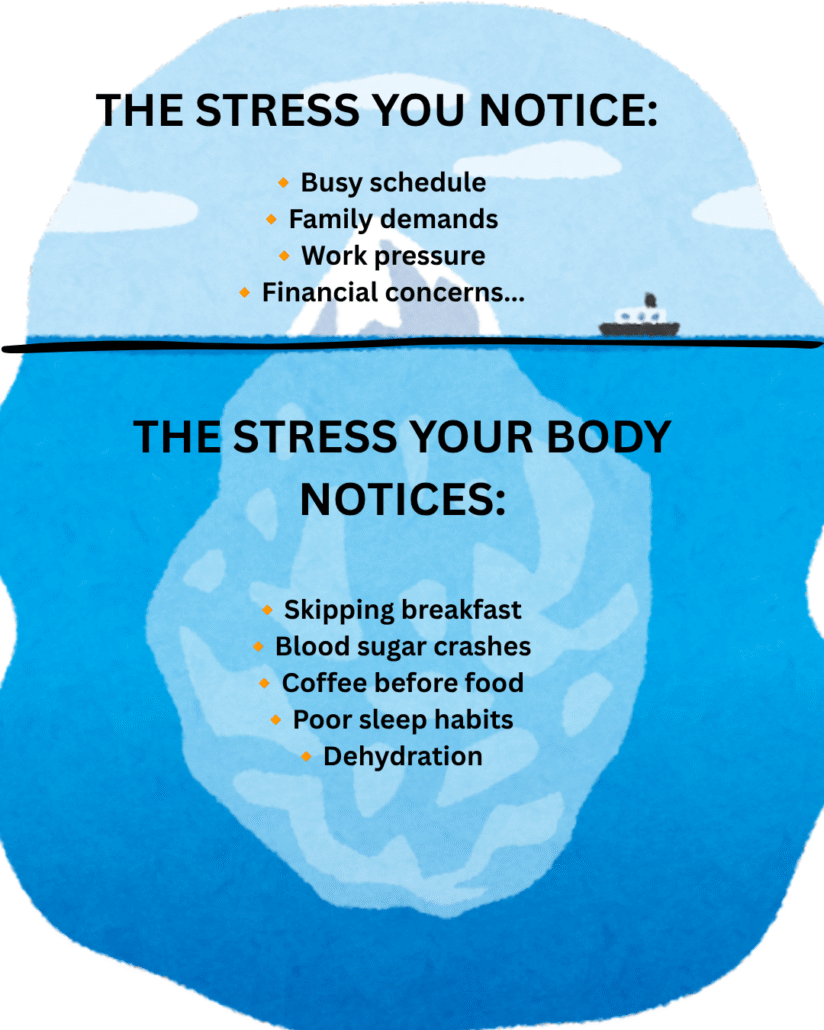
Your body doesn’t just respond to emotional stress. It also responds to physiological stress.
Just as your body doesn’t distinguish between a real threat and a perceived one (think: watching upsetting news versus being chased by a tiger), it also doesn’t distinguish between emotional stress and physical stress.
In both cases, cortisol gets the call.
Sometimes, hidden stressors can quietly keep cortisol elevated and make weight loss feel much harder than it should.
Here are five surprisingly common things that may be adding to your stress load without you even realizing it.
1. Skipping Breakfast Can Increase Cortisol
If food doesn’t arrive within about an hour of waking, your body may perceive a fuel shortage and release cortisol to mobilize stored energy.
While this is a normal survival mechanism, repeatedly skipping breakfast can keep cortisol elevated longer than necessary.
What to do:
✅ Eat within an hour of waking.
✅ Include quality protein, fibre, and healthy fats to help stabilize blood sugar and support healthy cortisol levels. Get some inspiration HERE
2. Blood Sugar Spikes and Crashes Trigger Stress Hormones
A breakfast of toast and jam, cereal and juice, muffins, granola bars, or fruit alone can send blood sugar soaring.
The resulting crash triggers cortisol and adrenaline to bring blood sugar back up, often leaving you foggy, hungry, and craving more carbs.
What to do:
✅ Build meals around protein, healthy fats, and complex carbohydrates.
This is exactly what the Metabolic Balance® program does in a personalized and sustainable way.
3. Drinking Coffee on an Empty Stomach Can Increase Stress
(Guilty of this one.)
Coffee naturally stimulates cortisol production. When consumed on an empty stomach, it can amplify your morning cortisol surge and contribute to blood sugar instability throughout the day.
What to do:
✅ Enjoy your coffee with breakfast.
✅ Aim to keep it to a maximum of two cups before noon.
4. Blue Light at Night Can Disrupt Sleep and Cortisol
The blue light from phones, tablets, and TVs suppresses melatonin, your sleep hormone.
When melatonin is disrupted, cortisol doesn’t fall when it’s supposed to.
The result?
Difficulty falling asleep, staying asleep, or waking up feeling rested.
What to do:
✅ Limit screen time for at least 60 minutes before bed.
✅ Consider wearing blue-light-blocking glasses in the evening.
5. Dehydration Is a Stressor Too
Even mild dehydration is stressful to the body.
When blood volume drops, your body responds by activating stress hormones, including cortisol, to compensate.
What to do:
✅ Drink 2–3 litres of water each day.
If getting enough water is a struggle, check out my tips for making hydration easier HERE
Sometimes Stubborn Weight Loss Isn’t About Willpower
Sometimes stubborn weight loss isn’t about eating less, exercising more, or having more willpower.
It’s about removing the hidden stress signals your body has been responding to all along.
If you’re doing “all the right things” but still not seeing the results you want, there may be more going on beneath the surface than you realize.
Ready to Discover What’s Keeping You Stuck?
If you’re struggling with stubborn belly fat, cravings, poor sleep, or low energy despite eating well and taking care of yourself, I’d love to help.
Book a complimentary discovery call and let’s figure it out together.
Or simply reach out and tell me what you’re struggling with most.
Kim, xo