Bone Broth Benefits: Why I Still Believe in This Old-Fashioned Food
Join the List
Sign up to receive Tips for Easy Sustainable Weight Loss + bonus recipes in your inbox!
I don’t think being an animal lover means swearing off meat.
Now, choosing to eat meat or not is an incredibly personal choice — so let me explain.
Years ago, when I was studying holistic nutrition, I struggled with this decision.
There are many different perspectives on the role of animal foods in a healthy diet, and ultimately I had to figure out what worked best for me.
I dabbled with vegetarianism and veganism, but neither worked particularly well for me. I feel my best when I incorporate some animal protein into my diet.
We’re all unique.
So for me, the question became less about whether I eat meat and more about where it comes from and how the animal was raised.
Where My Meat Comes From Matters to Me
I source our meat very carefully.
A favourite place to shop is Les Fermes Valens, where animal welfare is a priority. We also buy pork from local farmers who raise their animals with care.
And we’re fortunate enough to raise some of our own food — meat birds, eggs and beef.
Our animals are exquisitely cared for.
That means access to the outdoors, good-quality feed, clean water, dry bedding and, as much as possible, minimizing stress.
For us, it also involves having the butcher come to us when it is time to process our beef or chickens.
No scary truck ride. No unfamiliar holding pens. The animals remain in the environment they know.
I believe there’s another piece to good animal stewardship, too: honouring as much of the animal as possible and wasting as little as possible.
Which brings me to bone broth.
Why We Make Bone Broth
When we processed our beef, we kept the bones.
For our great-grandparents, not wasting food wasn’t so much an ethical question as a question of survival.
Bones from butchered animals were saved and transformed into nourishing stocks and broths rather than being thrown away.
And perhaps they were onto something.
Well-made bone broth provides gelatin and amino acids such as glycine and proline, along with varying amounts of minerals and other nutrients.
These amino acids have important roles in the body, including as building blocks for proteins such as collagen.
And while bone broth certainly isn’t a magical cure-all, there’s some pretty fascinating research behind many of its components.
If you’d like to nerd out on the science a little more, I’ve linked a couple of articles HERE and HERE.
Maybe Grandma Was Onto Something
There absolutely was some wisdom behind Grandma handing you a bowl of homemade chicken soup when you weren’t feeling well.
I always flinch a little when people pull out the powdered stuff as a substitute.
Many commercial bouillon powders and flavouring products rely on flavour enhancers to create that deep, savoury — or umami — taste that develops naturally when we slowly cook food.
Personally, I’m not particularly interested in recreating the flavour of a beautiful, long-simmered broth with flavour enhancers.
I think getting away from preparing our own food hasn’t always served us well as a culture.
Bone broth is the real thing, and I think it deserves its spot in the limelight.
How We Make Our Homemade Bone Broth
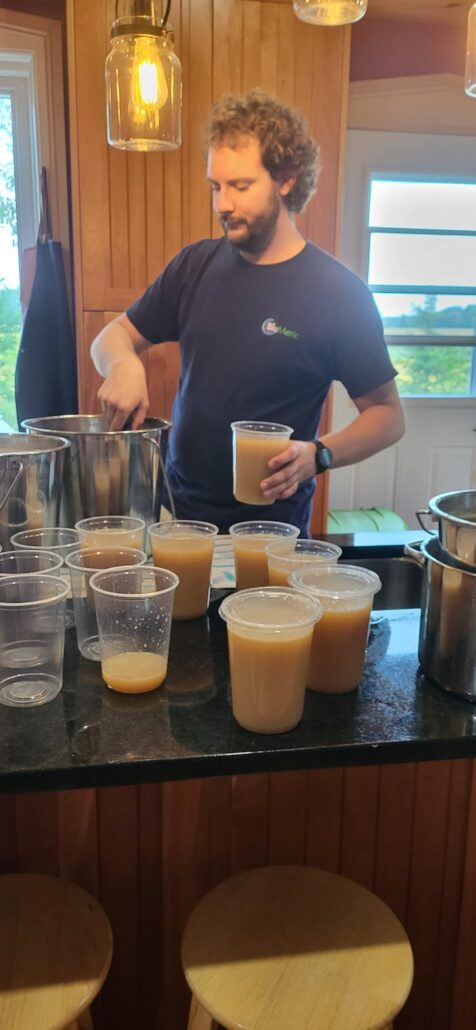
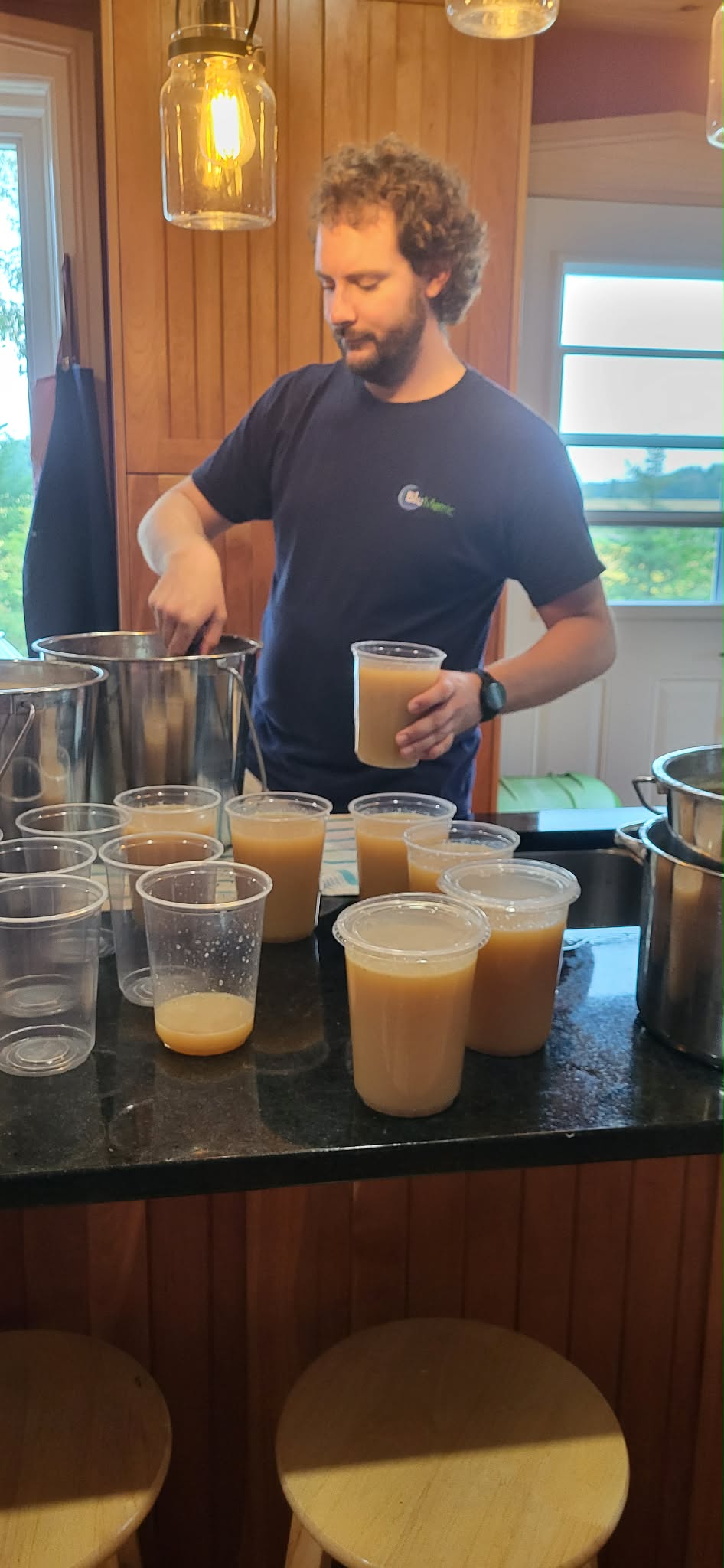
So Gian hauled the boxes of bones from the freezer and we set up for a long, slow simmer.
Bone broth can be made from just about any kind of bones. If you can, I recommend paying attention to where those bones come from and how the animal was raised.
I also like adding sea vegetables to make our broth extra nutrient-rich, but that’s completely optional.
Making bone broth may not be your idea of a fun weekend.
I get it.
But if this has tickled your curiosity, I hope you’ll give it a whirl.
GET MY BONE BROTH RECIPE BELOW
There’s something incredibly satisfying about making our own nourishing food from simple ingredients.
Old-fashioned? Maybe.
But sometimes the old ways have a lot to teach us.
Kim
Want Some Help Making Nutrition Feel Less Complicated?
Nutrition can feel ridiculously complicated.
My job is to help you understand your body, your habits and your food choices so you can make decisions you actually feel good about — and still enjoy your life.
If that sounds like the kind of support you’re looking for, book a free discovery call with me.
We’ll talk about where you are, where you’d like to be, and whether working together might be a good fit.
Join the List
Sign up to receive Tips for Easy Sustainable Weight Loss + bonus recipes in your inbox!

Bone broth
Equipment
- large stock pot
Ingredients
- 6-8 L water
- 3-4 lbs of organic bones; can include chicken necks feet, beef bones, lamb bones or a combination.
- Vegetable trimmings I save vegetable trimmings and freeze until ready to make broth
- Large piece kombu dulse or any other sea vegetable
- 4-5 tbsp apple cider vinegar
Instructions
- In a large stock pot, pour cold water over the bones, add vinegar sea vegetables and vegetable trimmings and gently bring to a boil. Gently simmer all ingredients. A scum will form once bones begin to simmer, skim this off and discard. Cover and replenish water as necessary. Boiling time should be between 24-48 hrs, the longer the better! I simmer mine overnight to extract the most possible minerals and nutrients from the bones.
- Stain broth, portion and freeze